Fort Myers Beach Rebuilding Real Estate: What Buyers Need
Rebuilding after a major storm changes how you buy on a barrier island. If you are considering Fort Myers Beach right now, you are not just choosing a home. You are also stepping into an active recovery story with evolving public projects, stricter flood compliance, and a buying process that often requires more diligence than a typical coastal purchase. The upside is that you can still find opportunity here, especially if you understand the rules before you write an offer. Let’s dive in.
Fort Myers Beach remains a post-storm rebuild market, and that matters for both day-to-day ownership and long-term planning. The town’s beach recovery updates show ongoing shoreline, access, and park work moving through phased design and construction.
That means a home can be fully rebuilt while nearby public infrastructure is still in progress. Lee County’s update on the Fort Myers Beach Pier is a helpful example, with construction expected to start in late 2026 and finish around August 2027 once design and permitting are complete.
If you are buying here, it helps to think beyond the house itself. Access, viewsheds, beach entry points, and nearby public amenities may continue to change as the island rebuilds.
The main theme in Fort Myers Beach right now is timing uncertainty. Public projects are moving forward, but not all on the same schedule. Some beach and park work is targeted for spring or summer 2026, while other pieces extend into 2027, according to the town’s published recovery materials.
For you, that creates a more layered buying decision. A property may look turnkey today, but the surrounding area could still have construction activity, changing access patterns, or temporary disruptions as the island continues to recover.
This does not make buying here a bad idea. It simply means your due diligence should cover both the private property and the public rebuild around it.
One of the biggest differences on Fort Myers Beach is flood compliance. The town says the entire Town of Fort Myers Beach is in a Special Flood Hazard Area, which is why flood insurance becomes a central part of the buying conversation.
If you are using a federally backed mortgage, flood insurance is mandatory for properties in that area. Just as important, standard homeowners insurance typically does not cover flood damage, and the town notes that disaster aid is limited and not automatic.
This is why buyers should treat insurance as an early-stage budget item, not a last-minute closing detail. On Fort Myers Beach, the cost of ownership is closely tied to elevation, flood-zone designations, and the level of code compliance.
Florida’s 8th Edition Building Code took effect on December 31, 2023. That means newer work is reviewed under the current code set, not older pre-2024 standards.
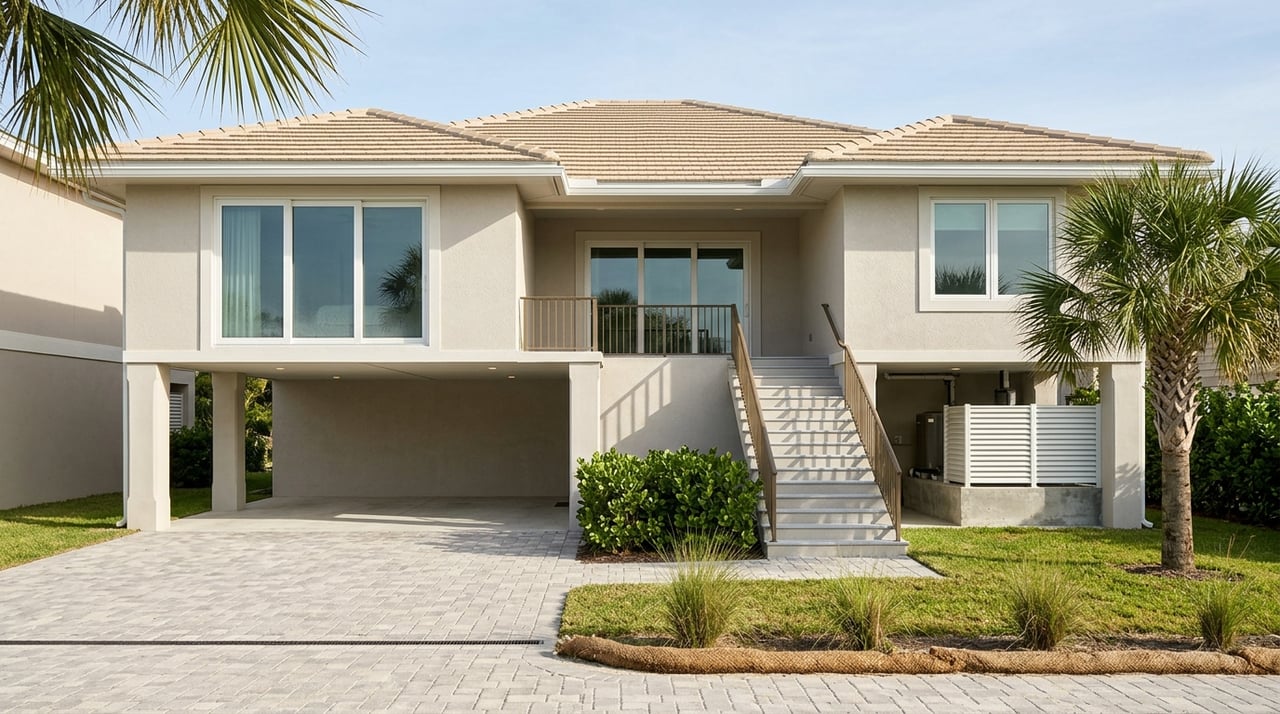
For buyers, that distinction matters. A completed elevated rebuild may offer a cleaner path from a compliance and flood-risk standpoint than an older structure that still needs major work.
That does not mean every older home is a poor option. It means the renovation path can be more complex, especially on a barrier island where permit standards and flood rules are tightly enforced.
If you are looking at an older home, the 50% rule is one of the most important concepts to understand. Fort Myers Beach enforces FEMA’s Substantial Improvement and Substantial Damage rule, which says that if repairs or improvements equal 50% or more of the structure’s value, the building must be brought into full compliance with current flood-map requirements.
The key detail many buyers miss is that the town also counts permits pulled over the prior five years in that calculation. So even if your planned renovation seems manageable on its own, earlier permitted work can affect whether the property crosses that threshold.
This can have major cost implications. Once full compliance is triggered, you may need to elevate, redesign, or rebuild in ways that significantly change the scope of the project.
Elevation can affect both safety and ownership costs. The town’s Build Responsibly guidance makes a plain-English point that building higher than Base Flood Elevation can reduce flood risk and may also lower insurance costs.
That is why many buyers today prefer homes that are already elevated and built to newer standards. In many cases, those properties are easier to underwrite, insure, and maintain than older cottages that may still carry compliance questions.
It is still a case-by-case decision, but elevation deserves real weight in your search. A lower purchase price on an older structure may not be the better value once insurance and future upgrade costs are considered.
Barrier-island purchases often require a more document-heavy review. Fort Myers Beach’s permit procedures and application requirements call for items such as sealed plans, a certified survey showing flood-zone and Coastal Construction Control Line information, and an elevation certificate.
For new construction, the town also requires an as-built survey showing the finished height relative to Base Flood Elevation before a certificate of occupancy can be issued. Its Building Services page also notes that applications run through the online portal, contractors must hold a state license, and land-disturbing projects need a stormwater pollution protection plan form.
If you are buying with plans to renovate, these details matter early. They affect timeline, contractor coordination, and your total carry costs.
An elevation certificate is one of the most useful documents you can review during due diligence. According to FloodSmart, it shows a building’s height relative to expected flood levels and can help verify compliance with local flood-safety requirements.
It may also influence the flood-insurance premium. If one is not already available, FloodSmart says a surveyor, engineer, or architect can prepare one.
In practical terms, many buyers prefer to review this information before or very soon after going under contract. It helps you estimate insurance more accurately and avoid assumptions about future ownership costs.
Flood insurance is not something to estimate casually on Fort Myers Beach. The town participates in the National Flood Insurance Program, which allows owners to apply for coverage, but the town’s flood-insurance guidance makes clear that flood loss is not typically covered by homeowners insurance.
The town’s FEMA and NFIP page also shows that CRS and premium treatment have been under active review through 2025. For buyers, the practical takeaway is simple: verify the current quote instead of relying on a past owner’s premium or assuming a fixed discount level.
If you are comparing two similar homes, the one with stronger elevation and clearer compliance may be easier to finance and budget over time. That can matter just as much as the contract price.
Fort Myers Beach is still a premium coastal market, but it may offer more negotiating room than some buyers expect. Realtor.com reports a median home sale price of about $725,000, with median days on market at 104 and homes selling about 6.8% below asking on average in February 2026.
That combination suggests you may have room to negotiate, especially when a property has condition issues, unclear compliance, or a more complicated insurance profile. At the same time, the island still commands a meaningful premium over the broader county.
The town’s FY2025 annual report says property values increased 12.3% over the last year, which supports the idea that buyers continue to see value in the island’s long-term recovery story. Still, appreciation is never automatic, and the most successful buyers here tend to focus on resilience, usability, and carrying costs first.
Many buyers are weighing two paths: purchase a finished rebuild, or buy an older property and create their own vision. On Fort Myers Beach, the simpler ownership experience often leans toward a completed elevated rebuild.
That is because newer elevated homes are generally easier to evaluate for code compliance and flood exposure. Older cottages can still be appealing, but the 50% rule, permit history, and possible elevation requirements can make the true cost harder to predict.
If you value fewer unknowns, a newer rebuild may offer a smoother path. If you are comfortable with more complexity and a longer timeline, an older property could still make sense, but only after careful review of permits, surveys, and flood documents.
Fort Myers Beach can still be a compelling place to buy, especially if you are looking long term and understand the moving pieces. The island is improving, but this is not a market where you want to make assumptions about insurance, permits, or nearby public projects.
A disciplined approach matters. Before you commit, review the flood zone, elevation certificate, permit history, recent and planned improvements, and how the surrounding area fits into the broader rebuild timeline.
If you want clear, high-touch guidance while you weigh Fort Myers Beach against other Southwest Florida waterfront options, Valarie Tillman can help you evaluate the tradeoffs and move forward with confidence.
Let Holly guide you through your home buying journey, contact me today!